

Sommaire
Les Fondements Historiques des Chiffres Arabes en Horlogerie
L'Évolution Technique et Esthétique des Montres à Chiffres Arabes
La MTZeta de MaisonDuTemps : La montre chiffres arabes par excellence
Les Fondements Historiques des Chiffres Arabes en Horlogerie
Introduction et Diffusion des Chiffres Arabes en Europe
L'histoire des chiffres arabes en Europe est une saga fascinante de transmission culturelle et d'innovation. Ces chiffres, originaires du monde arabe, ont été introduits en Europe vers le 10ème siècle. Leur adoption a marqué un tournant décisif, en particulier dans le domaine de l'horlogerie. Avant cette période, les horloges et les montres utilisaient principalement des chiffres romains, qui, bien que stylistiquement distincts, présentaient certaines limitations en termes de lisibilité et de simplicité. L'introduction des chiffres arabes a non seulement amélioré la précision dans la mesure du temps mais a également ouvert la voie à des conceptions horlogères plus avancées et plus précises, facilitant ainsi la création de montres et d'horloges plus complexes et fonctionnelles.

Impact des Chiffres Arabes sur le Design des Montres
Les chiffres arabes ont révolutionné le design des montres, apportant une touche de modernité et de fonctionnalité. Leur forme claire et leur facilité de lecture ont permis aux horlogers de concevoir des cadrans qui non seulement affichent l'heure de manière plus lisible, mais qui sont également esthétiquement agréables. Cette transition a ouvert la porte à une diversité de styles, permettant aux créateurs de montres de s'exprimer à travers une variété de designs allant du minimalisme moderne au luxe orné. Les montres à chiffres arabes sont devenues synonymes de modernité, offrant une toile de fond idéale pour l'innovation et l'expression créative dans l'art de la mesure du temps.
Les Premières Montres à Chiffres Arabes et Leur Signification
Les premières montres à incorporer des chiffres arabes ont marqué une étape importante dans l'histoire de l'horlogerie. Ces montres n'étaient pas seulement des instruments de mesure du temps; elles étaient des symboles de progrès et d'ouverture vers de nouvelles idées et techniques. En adoptant les chiffres arabes, les horlogers ont démontré leur volonté d'embrasser le changement et d'innover. Ces premières montres ont posé les bases de ce qui allait devenir une caractéristique standard dans l'horlogerie, influençant profondément le développement et le design des montres dans les siècles suivants.
L'Évolution Technique et Esthétique des Montres à Chiffres Arabes
Avancées Mécaniques et Innovations
Les montres à chiffres arabes ont bénéficié d'une série d'innovations techniques au fil des siècles. Les progrès dans la mécanique horlogère, tels que l'introduction de mouvements plus précis et la miniaturisation des composants, ont permis de créer des montres plus fiables et plus précises. Ces avancées ont été cruciales pour le développement de montres capables de mesurer le temps avec une exactitude sans précédent. De plus, l'intégration de nouvelles technologies et matériaux a permis de produire des montres non seulement plus performantes, mais aussi plus résistantes et adaptées à une variété de conditions d'utilisation.
Diversité des Styles et Impact Culturel
La diversité des styles de montres à chiffres arabes reflète leur impact culturel et leur adaptabilité aux tendances changeantes de la mode et du design. Des modèles classiques et élégants aux créations avant-gardistes et audacieuses, les montres à chiffres arabes ont traversé différentes époques, s'adaptant et évoluant avec le temps. Cette capacité à se réinventer a permis aux montres à chiffres arabes de rester pertinentes et prisées, reflétant les goûts et les préférences d'une clientèle diverse et exigeante.

Les Montres à Chiffres Arabes dans l'Ère Moderne
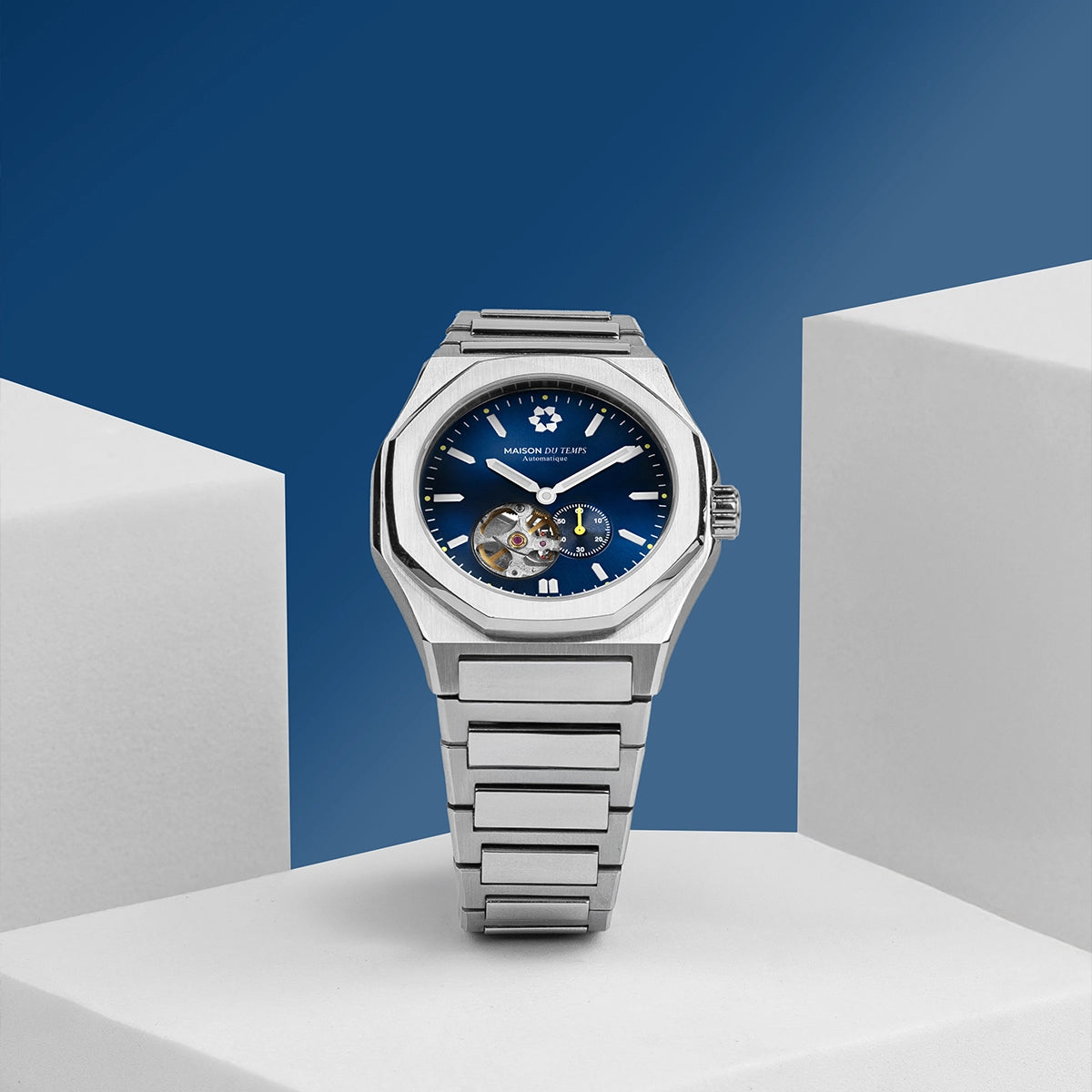
À l'ère moderne, les montres à chiffres arabes continuent de jouer un rôle de premier plan dans l'horlogerie. Elles combinent des technologies de pointe avec des designs innovants, tout en restant fidèles à leur riche héritage. Les montres modernes à chiffres arabes, telles que la MTZeta de MaisonDuTemps, illustrent cette fusion entre tradition et innovation. Elles incarnent l'évolution de l'horlogerie, où le respect du passé se conjugue avec une vision tournée vers l'avenir.
La MTZeta de MaisonDuTemps : La montre chiffres arabes par excellence
Conception Innovante et Caractéristiques Uniques
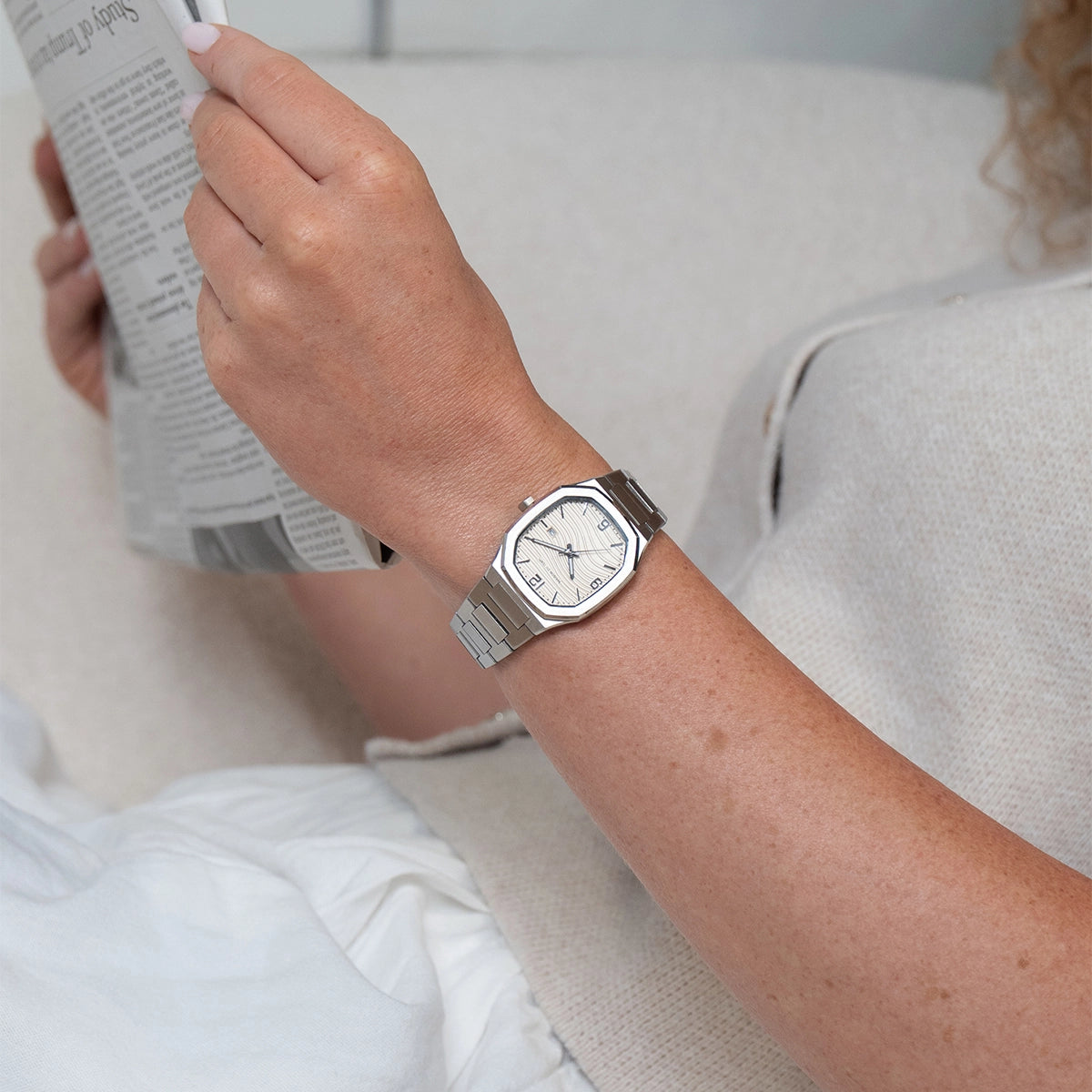
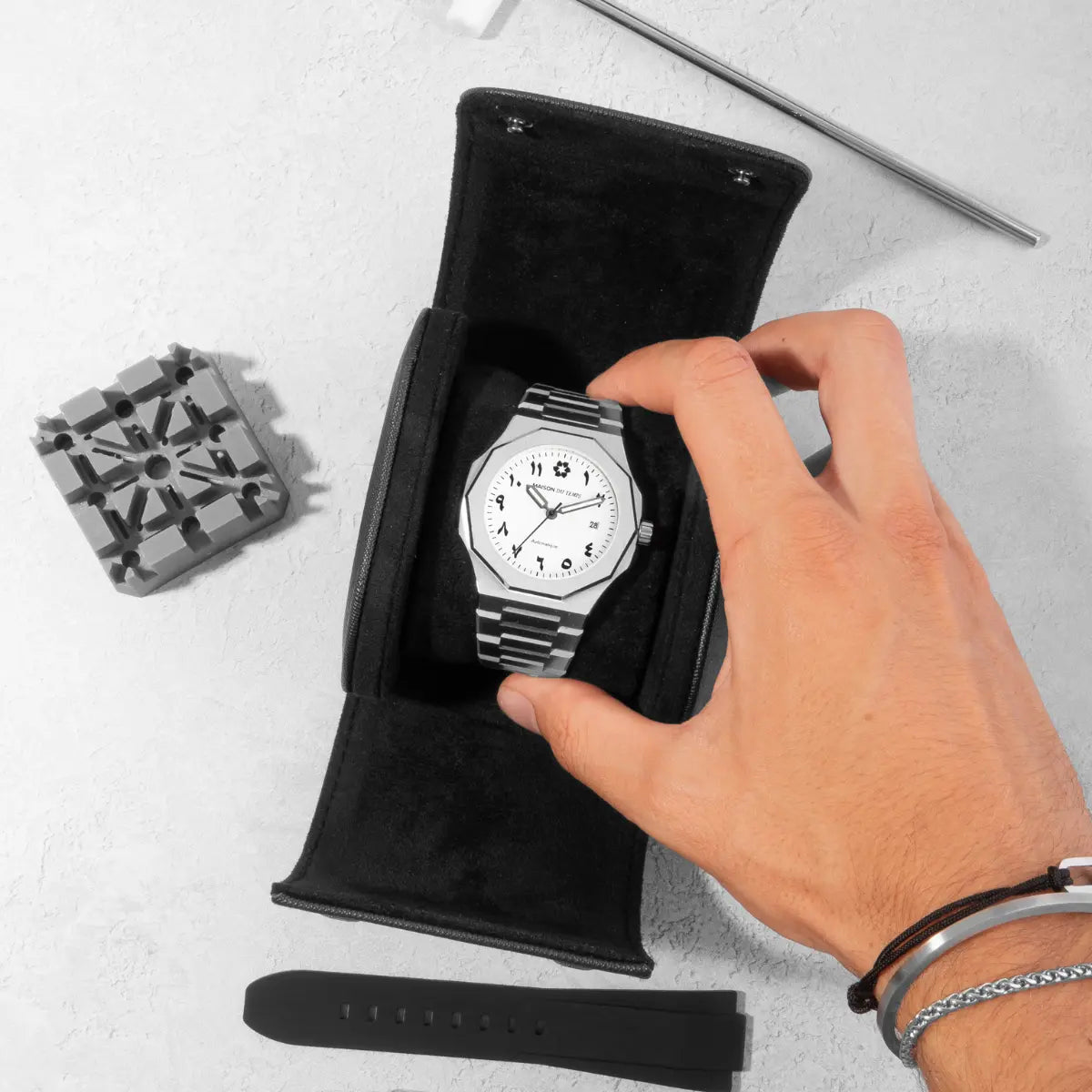
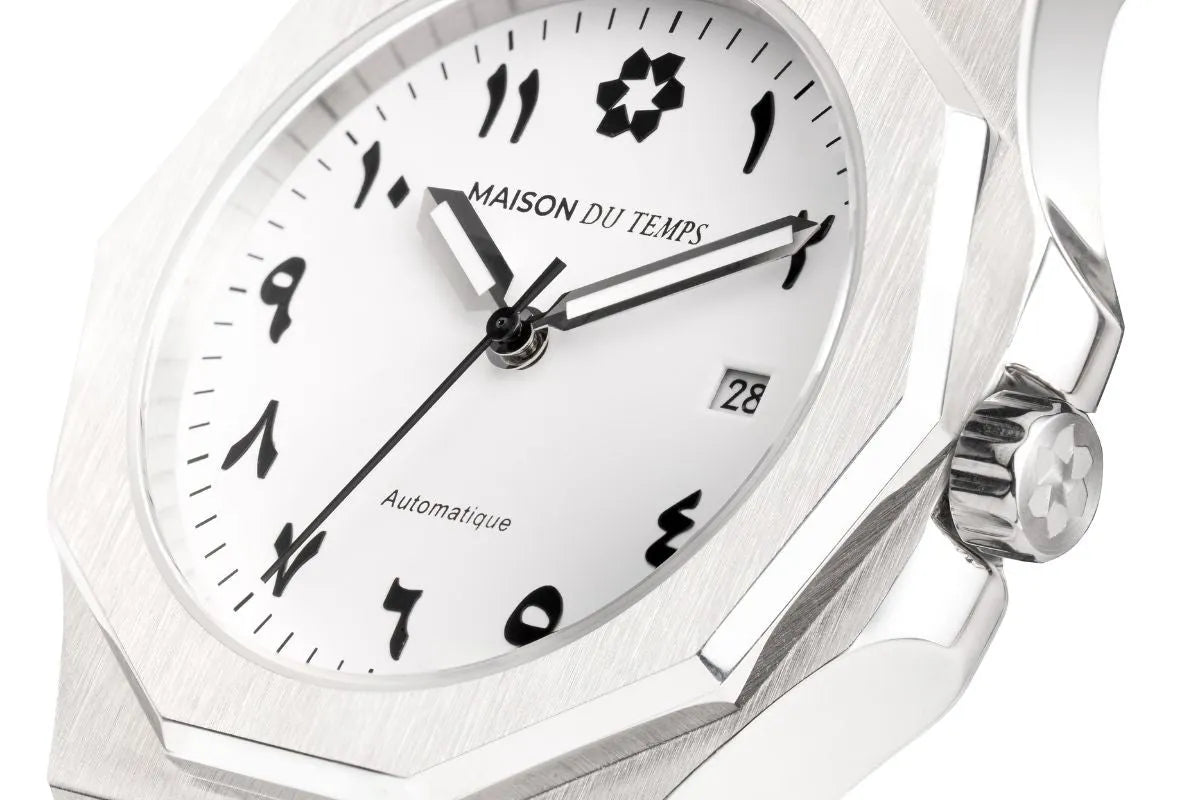
La MTZeta de MaisonDuTemps est une incarnation parfaite de la manière dont les montres à chiffres arabes peuvent être réinterprétées dans un contexte moderne. Son design, qui allie élégance et fonctionnalité, est le résultat d'une réflexion approfondie sur la manière dont la tradition horlogère peut être fusionnée avec des éléments contemporains. La montre présente un cadran clair et lisible, orné de chiffres arabes stylisés, qui non seulement facilite la lecture de l'heure mais ajoute également une touche d'élégance moderne. Les matériaux utilisés, tels que l'acier inoxydable pour le boîtier et le verre saphir pour le cadran, sont choisis pour leur durabilité et leur esthétique, reflétant l'engagement de MaisonDuTemps envers la qualité et le design.
Précision et Fiabilité Exceptionnelles
La précision et la fiabilité sont au cœur de la MTZeta de MaisonDuTemps. Equipée d'un mouvement Miyota 8215, reconnu pour sa précision et sa durabilité, la montre garantit une mesure du temps exacte et fiable. Cette attention portée à la qualité du mouvement est un témoignage de l'engagement de MaisonDuTemps à fournir des montres qui ne sont pas seulement belles à regarder, mais aussi exceptionnelles à utiliser. Chaque composant est soigneusement sélectionné et assemblé pour garantir que la montre fonctionne sans faille, offrant ainsi aux utilisateurs une expérience horlogère de premier ordre.
Personnalisation et Adaptabilité
La MTZeta se distingue par sa capacité à s'adapter aux goûts et aux besoins individuels. Avec des options de personnalisation telles que le choix entre différents cadrans, la montre permet aux utilisateurs de l'adapter à leur style personnel. Que ce soit pour un usage quotidien ou pour des occasions spéciales, la MTZeta offre une flexibilité et une adaptabilité qui sont essentielles dans le monde de l'horlogerie moderne. Cette approche de la personnalisation souligne l'importance de l'individualité dans le design des montres, permettant à chaque porteur de créer une pièce qui lui est véritablement propre.

FAQ sur les Montres à Chiffres Arabes
Quelle est la différence principale entre les chiffres arabes et romains dans les montres?
Les chiffres arabes, avec leur design simple et linéaire, offrent une lisibilité supérieure et un style plus moderne par rapport aux chiffres romains. Les chiffres romains, quant à eux, sont souvent associés à des designs plus classiques et traditionnels. Cette différence esthétique influence non seulement l'apparence des montres mais aussi leur lisibilité et leur fonctionnalité.
Les montres à chiffres arabes sont-elles plus précises que d'autres types de montres?
La précision d'une montre est principalement déterminée par son mécanisme interne et non par le style de ses chiffres. Cependant, les chiffres arabes, en raison de leur clarté, peuvent faciliter la lecture précise de l'heure, en particulier dans des conditions de faible luminosité ou pour les personnes ayant des difficultés de vision. Ainsi, bien que les chiffres en eux-mêmes n'influencent pas la précision mécanique de la montre, ils peuvent améliorer l'expérience utilisateur en termes de lisibilité.
Comment entretenir une montre à chiffres arabes pour assurer sa longévité?
Pour maintenir une montre à chiffres arabes en bon état, il est important de suivre quelques étapes clés. Tout d'abord, un nettoyage régulier avec un chiffon doux peut aider à préserver l'éclat et à éviter l'accumulation de saleté. Il est également conseillé de protéger la montre contre l'eau et les chocs, même si elle est étanche, pour préserver son mécanisme interne. Enfin, une révision périodique par un horloger qualifié est essentielle pour s'assurer que la montre fonctionne correctement et pour effectuer les réparations ou ajustements nécessaires. En suivant ces conseils, vous pouvez prolonger la durée de vie de votre montre et garantir son bon fonctionnement pendant de nombreuses années.